.avif)
Winter Maintenance for Boilers & Water Heaters in NYC
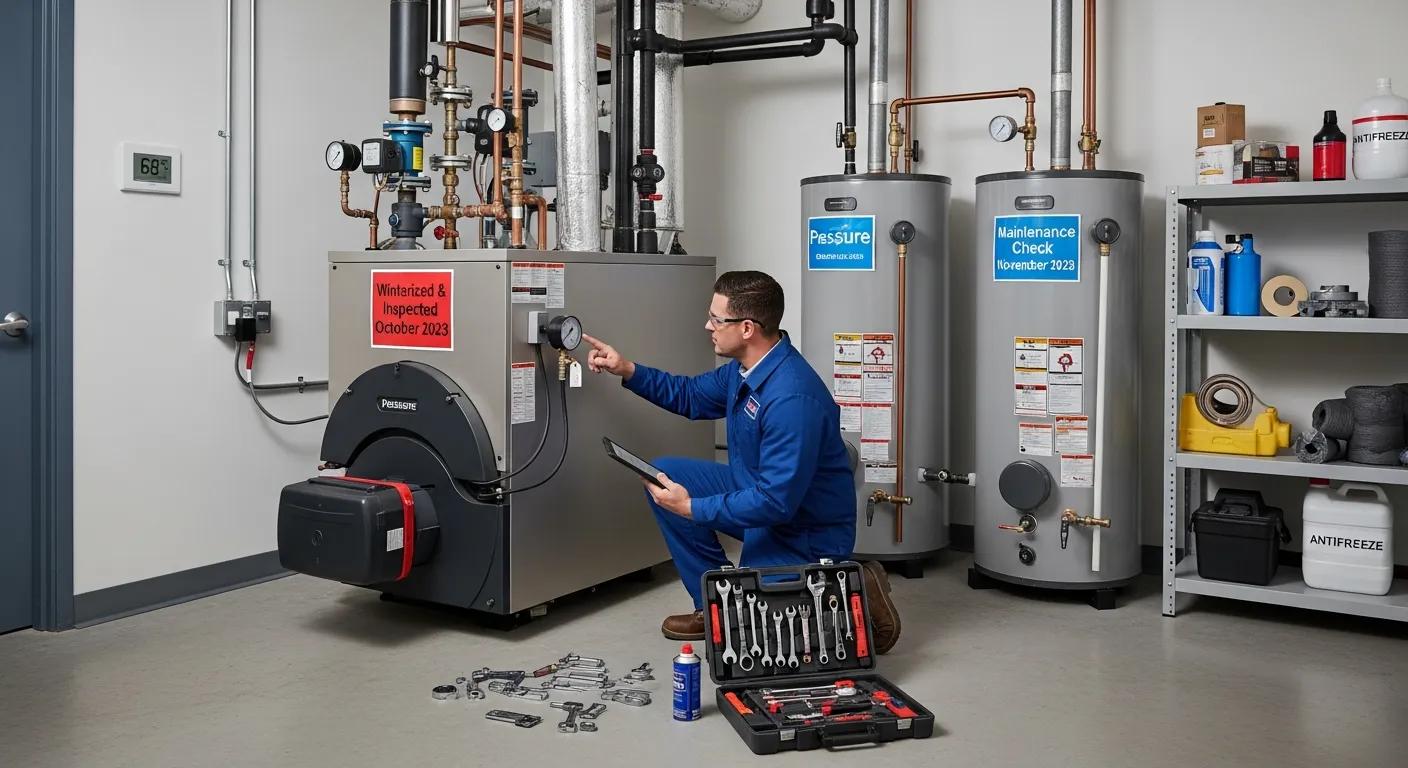
Preparing boilers and water heaters for winter is a coordinated program of inspections, tune‑ups, and freeze‑protection measures that keep commercial systems safe, efficient, and compliant during New York City’s cold months. This guide breaks down what winter preparation looks like — from combustion tuning and safety‑control testing to pipe insulation and condensate protection — and why those steps pay off with fewer emergency callouts, lower fuel use, and documented maintenance records for building managers. You’ll get clear, step‑by‑step procedures for commercial boiler tune‑ups, focused best practices for tank and tankless water heaters, a consolidated HVAC winterization checklist, and practical actions to meet NYC requirements like DOB inspections and Local Law 97 considerations. Next is a prioritized checklist you can act on now to prepare commercial boilers for winter.
Table of Contents
How do you prepare commercial boilers for winter in NYC?
What are the best practices for water heater winter maintenance in NYC?
Why is preventative heating system maintenance critical for NYC winters?
What does a comprehensive NYC HVAC winterization checklist include?
How can NYC businesses ensure compliance with local heating regulations?
How can you schedule reliable boiler winter service in NYC?
How do you prepare commercial boilers for winter in NYC?
Start winter prep with a pre‑season inspection and tune‑up that verifies combustion efficiency, safety controls, and pressure systems meet manufacturer specs and Department of Buildings expectations. A complete prep covers burner tuning, heat‑exchanger cleaning, safety‑control testing, venting and condensate checks, and clear documentation to match inspection windows. Safety is first: test relief valves, low‑water cutoffs, and combustion safeguards to reduce CO and fire risk and keep output steady. Below is an ordered checklist to complete before sustained cold; after that we include equipment‑specific guidance so teams can match tasks to installed boilers.
What are the key steps in a commercial boiler winter tune‑up?
A boiler tune‑up starts with a systematic inspection: confirm combustion performance, record flue and stack temperatures, and use a combustion analyzer to set the proper air/fuel ratio. Technicians then clean burners, inspect and clean the heat exchanger, and check for scale, corrosion or leaks that sap thermal performance and accelerate failures. Safety devices are tested in sequence — pressure/temperature sensors, relief valves, low‑water cutoffs — and any failed parts are logged and scheduled for replacement to avoid cascading issues. Final steps include checking ventilation and chimney integrity, verifying condensate drainage on condensing units, and delivering a concise service report facility managers can file for DOB inspections and warranty records.
How do NYC boiler inspection requirements affect winter preparation?
NYC Department of Buildings inspection rules shape winter prep by setting timelines and documentation expectations facility teams must meet. Annual inspections and proper record‑keeping show that pressure vessels and combustion systems are maintained; scheduling tune‑ups ahead of inspection windows prevents last‑minute noncompliance penalties or downtime. Coordinate tune‑ups and any corrective work so inspection‑ready documentation — service reports, test logs, and parts invoices — is on hand. Aligning maintenance with inspection cycles streamlines compliance and ensures repairs are done before peak demand, reducing the risk of shutdowns during extreme cold.
What are the best practices for water heater winter maintenance in NYC?
Winter maintenance for water heaters depends on whether you have a storage tank or tankless unit, but both need protection from freezing, combustion upkeep for gas models, and scale/condensate control. Best practice begins with an annual inspection, targeted flushing or descaling, verification of temperature‑pressure relief valves, and insulation of exposed hot and cold piping. For condensing tankless units, check condensate traps and drainage to avoid freeze blockages; for storage tanks, monitor anode rods and flush periodically to preserve heat transfer and limit corrosion. Below are concise maintenance actions facilities should schedule into their regular cycles.
- Inspect and flush storage tanks to remove sediment and preserve heat transfer.
- Descale tankless units and clean inlet filters to maintain flow and efficiency.
- Insulate piping and install heat‑trace where runs are exposed to cold air.
- Test relief valves and review thermostat settings to balance safety and energy use.
These steps reduce cold‑season failures and lead into specific winterization procedures for tank and tankless systems.
How should you winterize tankless and storage water heaters?
For storage tanks: perform a full drain‑and‑flush to remove sediment, inspect the sacrificial anode for corrosion, and replace it if depleted to avoid premature tank failure. For tankless units: descale periodically with an approved solution when hardness is present and clean inlet strainers; condensing tankless units also need condensate‑trap checks and insulation where appropriate. Both benefit from insulated piping, properly sloped drains, and maintaining a minimum ambient temperature in utility rooms to prevent freeze damage. If your team lacks the tools or you see heavy scaling, schedule professional service to descale and verify safety devices to protect warranties and ensure reliable winter performance.
How can you protect water heater pipes from freezing in NYC winters?
Protect piping with a combination of insulation, selective heat tracing, and maintaining minimum utility‑room temperatures so water stays above freezing during extended cold. Use closed‑cell foam on exposed copper or steel runs, add electric heat tape with a thermostatic controller on vulnerable sections, and insulate condensate and trap lines while ensuring proper slope to avoid standing water that can freeze.
Temporary emergency measures — like a slow trickle in exposed lines during extreme cold — can prevent pressure buildup and pipe rupture until a permanent fix is in place.
Implement monitoring and an emergency response plan so you detect freezes quickly and dispatch repairs before damage escalates. These practices tie directly to why preventative maintenance lowers winter risk.
Why is preventative heating system maintenance critical for NYC winters?
Preventative maintenance cuts emergency breakdowns, lowers fuel use through optimized combustion, and extends equipment life — all essential for stable commercial operations during NYC’s high‑demand months. Routine service addresses small wear items — drifting burner calibration, worn seals, scaling — before they cascade into costly failures and after‑hours repairs, and it establishes documented care that meets regulatory expectations. Combustion tuning and clean heat exchangers restore efficiency and reduce fuel bills; verified safety tests reduce liability and occupant risk. The section below explains how routine upkeep reduces failures and the concrete gains facility managers can expect from annual tune‑ups.
Reduced emergency repairs: Early detection prevents large failures that require costly after‑hours service.
Improved efficiency: Combustion tuning and heat‑exchanger cleaning lower fuel use and operating costs.
Compliance and safety: Documented maintenance supports DOB inspections and helps preserve warranties.
Those benefits translate into fewer breakdowns and measurable operational savings, detailed in the next section.
How does preventative maintenance reduce boiler breakdowns and energy costs?
Preventative maintenance removes the root causes that accelerate wear: soot and scale reduce heat transfer, causing higher return‑water temps and increased cycling; drifting burner settings lead to incomplete combustion and wasted fuel. Regular combustion analysis recalibrates air/fuel ratios to target efficiency, cutting unburned fuel and carbon output — a valuable improvement for Local Law 97 reporting. Replacing worn seals, valves, and sensors before they fail also prevents emergency shutdowns and unplanned downtime. In short, planned maintenance shifts costs from unpredictable emergency repairs to budgetable, lower‑risk service events and improves your bottom line over time.
What are the benefits of scheduling annual heating system tune‑ups in NYC?
Annual tune‑ups deliver clear operational advantages: better uptime through proactive repairs, steadier energy performance that lowers utility costs, preserved manufacturer warranties through documented service, and a reliable audit trail for inspections. For commercial owners, predictable maintenance schedules make budgeting easier and protect capital investments that require proof of service to maintain warranty coverage. Well‑maintained systems also tend to last longer and retain higher asset value — all reasons annual tune‑ups are a cost‑effective part of equipment management.
What does a comprehensive NYC HVAC winterization checklist include?
A practical winterization checklist combines pre‑season inspections, freeze protection, safety‑device testing, combustion calibration, and recordkeeping into an actionable plan for building managers. Prioritize life‑safety items first — relief valves, low‑water cutoffs, CO detectors — then efficiency tasks like combustion analysis and heat‑exchanger cleaning, followed by preventive measures such as pipe insulation and condensate trap protection. Below is a clear, numbered checklist to complete before sustained cold, plus an EAV table linking each item to its benefit and the risk of skipping it.
Which energy efficiency tips optimize commercial heating systems in NYC?
Efficiency improvements range from low‑cost control tweaks to capital upgrades that deliver measurable savings and support Local Law 97 targets. Start with control scheduling and staging to match heat output to occupancy, add smart thermostats and monitoring to spot anomalies early, and keep combustion tuned to manufacturer settings. Where feasible, consider retrofits such as variable‑speed pumps, economizers, or heat recovery to reduce fuel use and emissions while improving comfort. Prioritize projects by payback and regulatory impact and phase work so efficiency upgrades complement routine maintenance.
How can businesses prevent frozen pipes and heating failures during winter?
Prevent frozen pipes by combining physical protections — proper insulation, thermostatic heat trace, and minimum utility‑room temperatures — with procedural steps like scheduled monitoring and an emergency response plan. Insulate exposed runs with materials rated for the environment, install thermostatically controlled heat tape on critical sections, and keep condensate traps and drains properly sloped and insulated. Add leak detection and remote monitoring for early alerts and keep a contractor contact list to speed repairs when needed. These measures greatly reduce the chance of catastrophic water damage and keep systems running through prolonged cold.
How can NYC businesses ensure compliance with local heating regulations?
Compliance means knowing DOB inspection schedules, keeping precise service records, and documenting maintenance that affects emissions and safety — work that dovetails with winter preparation. Maintain service reports with test readings, parts replaced, and technician sign‑offs as the documentary foundation for DOB inspections and Local Law 97 reviews. Calendar inspections, work with qualified technicians who can sign required forms, and centralize records so audits are straightforward and corrective actions traceable. The subsection below summarizes inspection requirements and practical scheduling tips to minimize compliance risk.
What are NYC Department of Buildings’ boiler inspection and reporting requirements?
The Department of Buildings requires periodic inspections and documentation for boilers and pressure vessels; building managers should retain inspection records and show that required safety checks and repairs were performed. A practical approach aligns tune‑ups and maintenance with inspection windows so technicians can provide test data and sign‑offs when inspectors request them. Keep organized logs of combustion readings, safety‑control tests, and parts replaced to speed reporting and avoid fines. Scheduling service ahead of inspection deadlines reduces last‑minute scrambling and ensures repairs are completed on a planned timeline.
How does Local Law 97 impact boiler and water heater winter preparation?
Local Law 97 incentivizes emissions reductions and efficiency, which raises the priority of combustion tuning, control optimization, and documented performance improvements during winter prep. Maintenance that restores efficiency — burner tuning, heat‑exchanger cleaning — directly lowers fuel use and emissions and can contribute to a building’s compliance path. Tracking pre‑ and post‑service efficiency metrics helps demonstrate improvement. For longer‑term projects, Local Law 97 can justify investments in efficiency upgrades or fuel conversions, and robust maintenance records provide defensible evidence of operational gains. Winter prep therefore supports both near‑term reliability and longer‑term emissions goals.
How can you schedule reliable boiler winter service in NYC?
Scheduling reliable service starts with selecting contractors who have commercial experience, factory training for your equipment, transparent pricing, and fast emergency response. Define the scope — tune‑up, inspection support, freeze‑protection installs — and request written proposals that list tasks, timelines, and warranty terms. Prefer factory‑trained technicians who troubleshoot brand‑specific boilers like Weil‑McLain, Burnham or Peerless, and choose providers that offer same‑day response for emergencies and predictable pricing for budget planning.
Below is a short procedural list to use when arranging service, followed by the advantages of qualified providers.
1. Define the scope and list all equipment by type and model for accurate proposals.
2. Request written proposals with task lists, timelines, and warranty terms.
3.Confirm technician qualifications, brand training, and expected response times.
4. Schedule pre‑season work early and hold a contingency window for follow‑up repairs.
These steps help managers evaluate offers and secure timely service to reduce winter risk. The next section explains why factory‑trained technicians matter.
What are the advantages of choosing factory‑trained technicians for winter maintenance?
Factory‑trained technicians bring brand‑specific diagnostics, correct adjustment procedures, and the ability to perform warranty‑preserving service on equipment from Weil‑McLain, Navien, Rinnai, AO Smith, Bradford White, and similar manufacturers. Their training covers calibrated combustion settings, modern modulation controls, and failure modes unique to each platform, which shortens diagnostic time and lowers the chance of incorrect repairs. Using factory‑trained technicians helps ensure maintenance follows manufacturer specs required to keep extended warranties intact — translating to quicker fixes, better long‑term reliability, and lower total cost of ownership.
How does transparent pricing and extended warranty benefit NYC commercial clients?
Transparent pricing and extended warranties protect commercial clients by converting uncertain emergency costs into predictable service commitments and shifting replacement risk for covered components. Clear estimates let facility managers budget maintenance and replacements with fewer surprises; multi‑year warranties move some lifecycle risk to the provider. When paired with documented preventative maintenance, these offerings strengthen vendor risk control and support long‑term asset planning. Combined with transparent pricing and written warranties, this forms a durable service model for winter readiness.
Liberty HVAC provides residential and commercial HVAC and refrigeration across Brooklyn, Queens, the Bronx, Staten Island, Manhattan, Nassau and Westchester. For heating, we install and service residential and light commercial boilers (Weil-McLain, Burnham, Peerless), with transparent pricing, a workmanship warranty up to 5 years and financing options. Call (718) 490-4449 to schedule pre-season service.
Need help? Schedule a boiler tune-up before the cold arrives. Call Liberty HVAC at (718) 490-4449.
Scope definition: Request a written scope for tune‑ups and freeze‑protection work.
Qualification check: Confirm factory training for your specific equipment brands.
Warranty and pricing: Ask for transparent pricing and multi‑year warranty options.
Scheduling: Book pre‑season service and reserve an emergency response window.
This simple procedure helps facility teams secure reliable service while keeping the focus on effective winter preparation.
Frequently Asked Questions
What are the signs that a boiler needs maintenance before winter?
Watch for unusual noises, uneven heating, rising energy bills, visible leaks, or corrosion. Frequent short cycling or control warning lights are also red flags. These symptoms indicate it’s time for a professional inspection — catching issues early prevents costly breakdowns during winter.
How often should water heaters be serviced in NYC?
Service water heaters at least annually to maintain performance and longevity. For storage tanks, that means flushing to remove sediment and checking the anode rod and valves. Tankless units typically need descaling every 6–18 months depending on water hardness. Regular service reduces unexpected failures and keeps hot water reliable when demand is high.
What should businesses do if their heating system fails during winter?
First, ensure occupant safety. Then contact a qualified HVAC technician immediately and follow your emergency plan. Temporary measures like portable heaters can maintain safe conditions until repairs arrive. Having pre‑season maintenance and an emergency contractor list greatly reduces the chance of extended outages.
Are there specific regulations for boiler emissions in NYC?
Yes. Local Law 97 and related regulations set emissions limits and encourage efficiency improvements. Regular maintenance — combustion tuning, control optimization, and record‑keeping — helps buildings stay within required limits. Keep detailed maintenance and emissions records to support compliance during inspections and audits.
What are the benefits of using factory‑trained technicians for winter maintenance?
Factory‑trained technicians follow manufacturer procedures, which preserves warranties and ensures accurate diagnostics. Their brand‑specific knowledge reduces downtime and prevents incorrect repairs, helping systems run reliably through winter and lowering long‑term repair costs.
How can businesses prepare for potential heating emergencies in winter?
Prepare by scheduling proactive maintenance, establishing an emergency response plan, and keeping a current list of reliable service providers. Invest in monitoring systems for early alerts and train staff on basic troubleshooting. A small cache of emergency heating equipment can also help bridge short outages.
What are the cost implications of neglecting winter maintenance for heating systems?
Neglecting maintenance can increase energy bills, lead to expensive emergency repairs, shorten equipment life, and even result in fines for non‑compliance. Regular maintenance mitigates these risks, improves efficiency, and ultimately saves money by avoiding large, unexpected expenses.
Conclusion
Getting boilers and water heaters ready for NYC winter protects safety, cuts energy use, and keeps you on the right side of local regulations. Follow the maintenance steps and checklist here to reduce emergency breakdowns, lower operating costs, and preserve equipment value. Book your pre‑season service now to lock in reliability and protect uptime through the harsh months ahead.
Why Call a Professional?
Don’t wait for a minor issue to become a major hassle. If you notice any of these signs, schedule a professional service visit to keep your HVAC system running smoothly and efficiently.